
Pondering The Open Loop? Navigating the Strange World of Off-Table Play
Exploring the outer reaches of the "Everything is Play" idea


The other day, I was making tea at home and—in idle moments, waiting for things to heat up—I started thinking about the zone-based combat in Vaesen.
Before I knew it, I had a salt shaker pressed into service as Elias the butler. I grabbed the pepper grinder and imagined it as The Archdeacon Ignatius Krantz. I looked around for something to represent the Vaesen, and my eyes alighted on a conveniently-situated oil cruet. Then I opened the cutlery drawer and used some utensils as distance markers as I tried to solidify the rules in my head…
The carbonara was delicious, by the way. Thanks for asking! 🧑🍳
Am I the only person here whose mind turns to solo tabletop role-playing games in the oddest of odd moments?
Ok, just me then 🙁
We’re all familiar with the mantra “Everything is play”, first coined, I believe, by Geek Gamer in her book, Solo Game Master’s Guide. I suspect she had in mind things like character creation or reading rule books more than playing with kitchen equipment whilst cooking a meal, but still…
I’m definitely not crazy—or at least I don’t think so. In fact, what I’m describing here is something of a phenomenon in the tabletop community often called “The Game Between Games.”
Whether it’s solo play or a group campaign, the mental energy we pour into our stories outside of the actual dice rolling is a huge part of the hobby’s appeal. And for us solo players specifically, this “pondering” might just be where the best narrative breakthroughs happen.
I tried to get Google to tell me where the phrase “The Game Between Games” first arose or who coined it. It didn’t really come up with a specific answer, but it did say that it seemed to be first popularised in the wargaming hobby in the 1970s. Feel free to correct me if you know better. But it makes sense that wargaming would be the source for this phrase—given how much tactical planning and strategy must go on between sessions. In other words, wargamers might do more in-between sessions than when they are sitting at the table…something that feels comfortingly familiar in my own play.
What I did discover in my research was that there is actual science involved in “playing” games between game sessions. Yes, really.
Let’s “do” science, eh?
The Zeigarnik Effect
This is a psychological principle stating that people remember uncompleted or interrupted tasks much better than those they have already finished.
Named after Soviet psychologist Bluma Zeigarnik, who first observed it in the 1920s while watching waiters remember unpaid restaurant orders, the effect describes a state of “cognitive tension.” When we start a task, our brain opens a mental loop that stays active and accessible until it is closed by completion.

In solo TTRPGs, the Zeigarnik Effect is the “engine” behind the “game between games”. Because we are the only ones driving the story, the lack of immediate resolution creates powerful mental hooks. If we end a session mid-story or right as a mystery is revealed, our brain treats that “open loop” as a priority. This is why we often find ourselves pondering alternative outcomes while doing chores; our mind is trying to resolve the tension and find closure.
Have you ever lain awake at night thinking about your latest solo campaign? I know I have. You’re NOT going crazy. It’s the Zeigarnik Effect.
I think it’s one reason we solo players often instinctively stop at a “cliffhanger.” Yep, it’s the Zeigarnik Effect again! This ensures that the game remains at the forefront of our memory, making it easier to jump back into the flow of the story days later.
In the same way, when a battle goes poorly, the “unfinished” nature of the defeat (or the looming threat) forces your brain to simulate different tactics. We aren’t just mindlessly daydreaming; we are performing what psychologists call “cognitive rehearsal” to close the loop on a perceived problem.
By leaving our games slightly “unfinished,” we leverage our brain’s natural bias toward completion to keep our creative momentum alive between sessions.
So, take heart, guys. Those random ponderings about Ironsworn or Shadowdark as we drift off to sleep at night aren’t just weirdness—they are a natural function of the brain that plays into our solo TTRPG hobby.
I still wouldn’t suggest pondering too deeply about your Call of Cthulhu campaign before falling asleep, though…
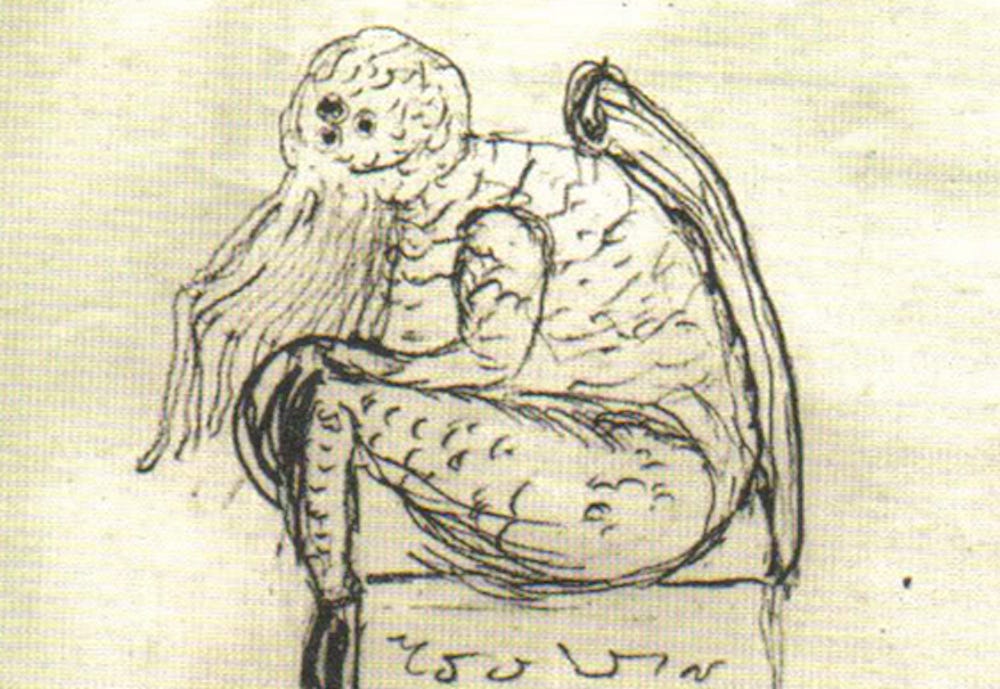
Pondering the “What if” Choices
Have you ever found yourself looking at an oracle and not feeling ready to deal with a narrative choice at that moment?
Considering alternative tactics or "what-if" scenarios is our brain's way of mastering the game's systems, and it’s perfectly reasonable to think carefully about the next steps without risking a character's death on a bad roll.
Often, I find the "Oracle" (whether it be random tables or a huge table of prompt words) plants a seed during play that needs time to grow. At stress points in a campaign, being thrown two or three thematic “words” can lead to a thoughtful moment in which a specific choice could send our game down an entirely different path. I don’t always want to make that choice right away! Sometimes I want to ponder, think and “game” a few different options.
Hanging around here, on Substack or over on Reddit or Facebook, I sense that many people in the solo TTRPG community actually turn this into part of the gameplay loop. Thinking through a scene while commuting or doing chores so that when we finally sit down, we can write or play with total clarity is all part of the “play between play” that we are discussing here.
Let’s talk about “Deafult Mode Network” …WHAT??
This mental labour is more than just preparation; it is a specialised state of mind that, again, there’s some science behind it. When we move those salt shakers across the kitchen counter, our brain engages its Default Mode Network—the creative workshop that flickers to life when we aren’t focused on a specific external task.
The Default Mode Network is especially active, research shows, when one engages in introspective activities such as daydreaming, contemplating the past or the future, or thinking about the perspective of another person. (Psychology Today)
It’s why a tactical blunder feels so personal and why our subconscious insists on “fixing” the encounter while we’re awake in the middle of the night, walking to the train station or even whisking a sauce. We are essentially building a mental library of counterfactuals, simulating “what if” scenarios that strengthen our cognitive flexibility and make the eventual return to the gaming table feel like stepping back into a world that never truly stopped moving.
I’ve found that when I sit down at my table—and I’m fortunate to have a permanent gaming setup in one of the spare bedrooms—it almost feels like “coming home.” Because I’ve been thinking through options and “what ifs”, I can slide easily back into the world of the game and make progress with a sureness and confidence.
Ultimately, this “playing when not playing” transforms solo gaming from a mere pastime into a more rounded narrative experience. We aren’t just rolling dice; we are world-building in the margins of our lives. Sounds cool, eh? By embracing these moments of “off-table play,” we allow our stories to breathe and evolve far beyond the constraints of a single sitting.
It turns out that the salt-shaker butler and the oil-cruet monster are just signs of a healthy, highly engaged imagination doing exactly what it was evolved to do: solve puzzles and tell stories. Phew! And there I was, thinking I might be going a little bit crazy 🤪
But I’m curious—how does this mirror your own gaming experience? Do you find yourself mapping out dungeon corridors in the steam on the shower door, or perhaps debating character motivations with yourself during a long drive?
I’d love to hear about your own “kitchen counter” moments or the oddest place the Zeigarnik Effect has triggered a breakthrough in your game. Drop a comment below and let’s compare notes on the beautiful, weird science of the game between games!
I don’t like it much, but sometimes, if I wake up in the middle of the night, my mind starts to wander and more often than not, it’s a plot twist to my Ironsworn campaign, like an itch that won’t leave me alone.
Other times is when I’m outside, walking the dog. It doesn’t require that much brain power so it’s natural that the mind then wanders and starts processing ”background stuff” so to speak.
This is exactly where there are usually 5 days between me playing Silver Spire and writing it up. It's got to percolate in my brain. And by the way, welcome to the brain nerd club! Look at you, Default Mode Network. Excellent!